Showing posts with label William Bendix. Show all posts

Wednesday, March 4, 2026

Crime tourists, Part I: Yanks behaving badly in foreign lands

Orson Welles, ‘The Third Man’ (1949).

By Paul Parcellin

Film noir loves morally sketchy locales — the kind of places where law and order is on life support and police can be manipulated like a vending machine. Like America’s Wild West, post-war Europe and Asia’s rubble strewn roadways were a magnet for drifters, bootleggers, grifters and fugitives in need of a hideout. Those undesirables were likely chased out of Brooklyn, Chicago or wherever they were working an angle and needed a new ’hood in which to roost. 

The French coined the term film noir, and the Yanks (and others) returned the favor by exporting their rogues to distant lands already in the throes of great distress. Not exactly an even trade, but it makes for colorful drama: 

Glenn Anders, Orson Welles, ‘The Lady from Shanghai.”

 ‘The Lady From Shanghai’  (1947)


“The Lady From Shanghai” feels like a feverish nightmare narrated in voice-over by a speaker with a less than convincing Emerald Isle brogue. Minute by minute the stuff happening onscreen grows stranger as the film ambles toward its highly surrealistic conclusion. 

When Irish sailor Michael O'Hara (Orson Welles) rescues damsel in distress Rosalie Bannister (Rita Hayworth) he doesn’t anticipate the deep bed of quicksand he’s about to land in. O’Hara is attracted to Rosalie, who is in a May-December marriage to Atty. Arthur Bannister (Everett Sloane). Her husband is well aware of their flirtations, and O’Hara rightly senses trouble ahead. Despite his misgivings, he reluctantly accepts a job as an able seaman aboard Bannister’s yacht. The plan is to sail from New York to San Francisco via the Panama Canal. Along the way Bannister's law partner, George Grisby (Glenn Anders), joins the travelers and makes a stunning proposal to O’Hara, offering him $5,000 if he’ll pretend to murder him. Meanwhile, private eye Sydney Broome (Ted de Corsia), who has been watching from the sidelines, offers O’Hara a stern warning about Grisby and the double cross the unbalanced attorney has planned. Once in foreign waters, the Americans onboard seem to compete for the title of most underhanded, and it’s a close contest. Watch for the famous hall of mirrors finale. Quite a way to end a movie.

William Bendix, Jane Russell, Robert Mitchum, ‘Macao.’

Macao' (1952)


American drifters, corrupt cops and nightclub parasites people Macao, then under Portuguese rule. The location has all the atmosphere needed for an exotic adventure story. Gambling, booze, westerners in white linen suits and Panama hats abound. A New York undercover police officer is killed in the opening minutes, and before long three new arrivals to the island are swept up in the unlawful activities that thrive in this land of the unprincipled. Former U.S. Signal Corps Lieut. Nick Cochran (Robert Mitchum) arrives by ferry for no certain purpose other than staying far away from New York, where the police want to ask him unpleasant questions. Also aboard the ferry is nightclub singer Julie Benton (Jane Russell) and salesman Lawrence C. Trumble (William Bendix), who is hawking an odd assortment of wares. 

Every crime story needs a tough-guy gangster, and Vince Halloran (Brad Dexter), who runs a local casino, is just that. Halloran, who’s got problems of his own, suspects Cochran is out to get him, and he tries to persuade the drifter to blow town. But Cochran wants to stick around and get to know the nightclub chanteuse better. Predictably, friction results. 

Richard Widmark, ‘Night and the City.’
Night and the City’ (1950)


Con artist Harry Fabian (Richard Widmark) uses up every morsel of good will he might receive from friends as he scrambles to host wrestling matches in post-war London. Fast talking only takes him so far, and he’s stepped on some important toes. Given Harry’s slippery ways, it’s a cinch he’s worn out his welcome in his native land, America. 

This is one of Widmark’s most stellar performances. As Harry, he’s a mixture of smug, self-assuredness and raging self doubt. London is still shaking off the dust and rebuilding after innumerable German bombing raids. Like the city, Harry is in survival mode, living by his wits. But there are only so many lies and double crosses he can get away with before it’s time to pay the piper. And Harry’s bill is long overdue.

Gene Tierney, Ona Munson, ‘The Shanghai Gesture.’

The Shanghai Gesture’ (1941)


In Shanghai, an occupied zone overseen by Western forces, American gamblers, hustlers, and ethically challenged refugees behave atrociously in an exotic moral vacuum. Ground zero is a decadent, tiered casino crammed with tuxedoed high rollers. It’s a vortex of moral decay that sums up the mood in Shanghai. Seen from above, the gaming area resembles a giant funnel positioned to send a motley platoon of con artists straight down into the bowels of hell. Casino owner and resident dragon-lady "Mother" Gin Sling is being forced to move her gambling joint out of its well positioned location and into Shanghai’s Chinese sector. Wealthy English entrepreneur Sir Guy Charteris is buying up property and wants her out. Meanwhile, "Poppy" Smith (Gene Tierney) arrives, fresh out of an exclusive Swiss boarding school. She romances with shady poet "Doctor" Omar (Victor Mature) and develops a strong affinity for alcohol and gambling. Complications and double crosses abound as we learn that some of the characters here have met earlier and are not having a happy reunion.

Humphrey Bogart, ‘Tokyo Joe.’
Tokyo Joe’ (1949)


Ex-Air Force Col. Joe Barrett (Humphrey Bogart) returns to Tokyo after the war and finds that the nightclub he owned in earlier times, Tokyo Joe’s, is intact and being run by an old friend. But his wife, Trina (Florence Marly), a nightclub chanteuse whom he thought died in the war, is alive and in his absence has divorced him and remarried. Joe has a predictably awkward meeting with the new hubby. But he’s determined to get her back, and his 60-day visa doesn’t allow him much time to iron out the details. He enters into a business deal he hopes will buy him time to stay in the country longer. Trouble is, his new partner plans to operate a shady air transport company with Joe serving as the figurehead owner. In desperation, Joe is willing to exploit occupied Tokyo’s gray economy as a means to reunite with his ex-wife, who seems to have settled into her current marriage quite comfortably. Little does Joe know that there’s a dark spot on her past. 

Joseph Cotten, Trevor Howard, ‘The Third Man.’

The Third Man’ (1949)


Battle scarred as it is, post-war Vienna is an astonishing panorama of ornate facades, wide boulevards and grand Baroque palaces. Amid the imposing appearance of this imperial city, gangsters run a cornucopia of illicit rackets that puts an ugly face on the war-torn metropolis. Into a raucous tangle of humanity steps an innocent American, Holly Martins (Joseph Cotten), author of many a dime novel of the American Wild West. He’s come to Vienna at the urging of an old pal, Harry Lime (Orson Welles), who says he’s got a job for him. Turns out, this Austrian city is every bit as untamed as the cattle rustlers and gunfighters that spring from Holly’s pulp-fiction imagination. Barely in town long enough to catch his breath, Holly gets some bad news. It seems that Harry has, as Holly might write in one of his paperbacks, bitten the dust, the victim of a freak traffic accident. Holly meets Harry’s lady love, Anna Schmidt (Alida Valli), and begins poking around when the facts of Harry’s demise don’t appear to add up. But an earth shaking revelation brings the whole story into focus.  Let’s just say that the European gangsters in this mixed up town have nothing on one American hoodlum, who’s operating a particularly sleazy criminal enterprise there. Incidentally, the American hoodlum makes one of the greatest entrances in film history.

Next time, in Part II, we’ll look at films about Americans in foreign lands fighting the forces of crime, corruption and oppression.


Thursday, June 30, 2022

Out of the Shadows (and onto the Cathode Ray Tube)

Raymond Burr in 'Pitfall' (1948).

Film noir heavies and second bananas of the 1940s got respectable in the late ‘50s and ‘60s when they morphed into TV doctors, lawyers and sitcom moms and pops. But could they ever wash the stage blood off their hands?

You mean Mom and Pop were once arch criminals? Jeepers!

Yup, those affable folks we’d tune in to see on weekly TV series followed twisted paths in their younger days, when noir filled movie screens across the country. 


The Actors of Film Noir

In the 1940s and ’50s they murdered, robbed and kidnapped. Some were cops who chased, collared and manhandled hoodlums — Miranda rights weren’t a thing yet. Ever in close proximity to the scum of the earth, they were the ones in low-budget, gritty crime stories, always in black and white, relentlessly exploring the seedy underbelly of urban life. The dramas unfolded mostly at night, lit by neon signs and police spotlights. They chain-smoked cigarettes, bet on the ponies and kept a flask of hooch and a racing form in their coat pocket.

But by the late 1950s these denizens of the night left the silver screen — by choice or otherwise. Some made their way onto the small screen and starred in network television shows. Their transformation may have been a jolt for noir fans. The straight-laced characters they played on the boob tube were a far cry from the jackals and cutthroats some portrayed in films. No more brass knuckles and suitcases stuffed with loot. Instead it was family picnics, PTA meetings and touch football. Knuckle-dragging tough guys were replaced by wacky neighbors.

So, here’s a far from exhaustive list of some of the actors who made the leap into TV roles that starkly contrast with their former noir selves:

William Bendix and Hugh Beaumont in
The Blue Dahlia' (1946)
Hugh Beaumont played Ward Cleaver in the popular family sitcom “Leave It to Beaver” (1957 – ’63). But his TV sons, Theodore (Beaver) and Wally, and wife June, would be shocked to learn what skullduggery he was up to before he went straight. He was the shady Michael Dunn in “Bury Me Dead” (1947), where he may have been involved in a bludgeoning murder. His other noir roles were milder, but he persistently roamed among rough characters. In “Railroaded” (1947) he is police Sgt. Mickey Ferguson, investigating the murder of a fellow officer. In “The Blue Dahlia” (1946) he was George Copeland, whose Navy buddy, Johnny Morrison (Alan Ladd), is accused of murdering his wife. He also appeared in “Tokyo Joe” (1949), “Phone Call from a Stranger” (1952), “The Fallen Sparrow” (1943), “The Lady Confesses” (1945), “Night Without Sleep” (1952), “Apology for Murder” (1945), “Money Madness” (1948), “Pier 23” (1951) and “Alias Mike Hercules” (1956).

William Bendix, an actor who pulled off stunning personality changes, also appeared in “The Blue Dahlia” (1946) as Buzz Wanchek, Navy buddy to George and Johnny. Buzz, shell-shocked in the war, has painful seizure-like episodes and he just might have murdered Johnny’s wife during one of his fits. Among the numerous roles in crime films Bendix that played was the sadistic henchman Jeff in “The Glass Key” (1942), who gleefully beats Alan Ladd to a pulp. He also appeared in “Detective Story” (1951), “They Drive by Night” (1940), “The Web” (1947), “Macao” (1952), “The Dark Corner” (1946), “The Big Steal” (1949), “Calcutta” (1946), “Dangerous Mission” (1954), “Cover Up” (1949), “Crashout” (1955), “The Hairy Ape” (1944), “Race Street” (1948), “Johnny Holiday” (1949) and ”Gambling House” (1950). Who would have guessed that Bendix would turn up as the good-natured, occasionally put-upon, bumbling pop in the TV sitcom “Life of Riley” (1953 – ’58) — could Jeff be Riley’s evil doppelganger?  (Just a thought).

Barbara Stanwyck and Fred MacMurray
in 'Double Indemnity' (1944)
And then there were Walter Neff (Fred MacMurray) and Phyllis Dietrichson (Barbara Stanwyck), who plotted to ice Phyllis’s blowhard husband in “Double Indemnity” (1944). In the chilling murder scene, Walter pounces on the hubby and throttles him in the front seat of the family sedan as Phyllis calmly drives — ice water flows through her veins. In “Borderline” (1950), MacMurray plays an undercover cop trying to bust a drug smuggling ring. He was a corrupt cop in “Pushover” (1954) and a man in search of a stash of pearls in “Singapore” (1947). How odd it was to see him pivot to the role of widower Steve Douglas in the family sitcom “My Three Sons” (1960 – ’72). His roles in light-hearted family-friendly Disney movies were also a hoot.

Speaking of Barbara Stanwyck, she appeared in countless film noir roles, including the murderous Phyllis in “Double Indemnity” and the bedridden victim of a deadly plot in “Sorry, Wrong Number” (1948). Her other noirs include “Clash by Night” (1952), “The Two Mrs. Carrolls” (1947), “The Strange Love of Martha Ivers” (1946), “No Man of Her Own” (1950), “Crime of Passion” (1956), “Witness to Murder” (1954), “The File on Thelma Jordon” (1949), “The Lady Gambles” (1949), “The Other Love” (1947) and “Jeopardy” (1953). She later portrayed family matriarch Victoria Barkley in the TV western drama “The Big Valley” (1965 – ’69). It wasn’t her first western. She appeared in many, most notably as Jessica Drummond in Samuel Fuller’s “Forty Guns” (1957). But “The Big Valley” was among her most successful series, running four seasons. She also hosted a TV anthology series, “The Barbara Stanwyck Show” (1960 – ’61).

Robert Young and Jane Wyatt.
Robert Young played Larry Ballentine, a fast-talking, slippery character who ends up on trial for murder in “They Won't Believe Me” (1947). In “The Second Woman” (1950), he’s Jeff Cohalan, a guy who’s plagued by bad luck, persecution, or maybe paranoia. In “Crossfire” (1947), he’s Finlay, an investigator looking into a murder of suspicious circumstances. Later, he ditched the trench coat and put on a cardigan and portrayed average middle-class American dad Jim Anderson, father of Betty, Bud and Kathy, in TV sitcom “Father Knows” Best (1954 – ’60). Later, he starred as the kindly, wise physician in “Marcus Welby, M.D.” (1969 – ’76).

Jane Wyatt played Jim Anderson’s wife, Margaret, in “Father Knows Best.” Before her days in the Anderson household she was middle-class housewife Sue Forbes in “Pitfall” (1948), Marjorie Byrne in “House by the River” (1950), Lois Frazer in “The Man Who Cheated Himself” (1950), all solid noirs. 

An actor famous for portraying disreputable characters, Raymond Burr played numerous louts, sadistic mobsters, corrupt detectives and murderers in “Desperate” (1947), “Pitfall” (1948), “Raw Deal” (1948), “I Love Trouble (1948), “Walk a Crooked Mile” (1948), “Red Light” (1949), “Borderline” (1950), “His Kind of Woman” (1951), “The Blue Gardenia” (1953), “Rear Window”(1954) and “Crime of Passion” (1956). He finally ended up on the right side of the law as the eponymous Los Angeles defense attorney in the TV drama “Perry Mason” (1957 – ’66).

His “Perry Mason” co-star, William Talman, played District Attorney Hamilton Burger, the poor stiff who never won a case against Perry — except one, but Burger’s record was otherwise pitiful. He was something less that pitiful when he played sadistic killer Emmett Myers in “The Hitchhiker” (1953), the murderous Bailey in “The Woman on Pier 13” (1949), Dave Purvis in “Armored Car Robbery” (1950), Officer Bob Johnson in “The Racket” (1951) and Hayes Stewart in “City That Never Sleeps” (1953). Other noirs he appeared in include “Big House, U.S.A.” (1955), “Crashout” (1955) and “The Man Is Armed” (1956).

Vince Edwards in 'The Killing' (1956).
It wouldn’t be unfair to label Vince Edwards a punk, a thief and an adulterous murderer — in his early film roles, that is. He was double-crossing holdup man Val Cannon in Stanley Kubrick’s “The Killing” (1956), paid killer Philip Pine in “Murder by Contract” (1958), a murderous mechanic in “Hit and Run” (1957). His noir credentials also include “The Night Holds Terror” (1955), “Dark Passage” (1947). As the 1960s arrived, Edwards reformed and became the “against the medical establishment” Dr. Ben Casey in the TV drama “Ben Casey” (1961 – ’66).

Harry Morgan went from playing average guy Pete Porter on TV sitcom “Pete and Gladys” (1960 – ’62), to crime fighter Officer Bill Gannon alongside Sgt. Joe Friday in “Dragnet” (1967 – ’70). Later, he was Col. Sherman T. Potter in the Korean War-based TV sitcom M.A.S.H. (1972 – ’83). But in his pre-television roles he was often an unsavory character — a thug, a stooge, a flunky, and what have you. He appeared in “Dark City” (1950), “Not as a Stranger” (1955), “The Big Clock” (1948), “Somewhere in the Night” (1946), “All My Sons” (1948), “Scandal Sheet” (1952), “Moonrise” (1948), “Red Light” (1949), “Appointment with Danger” (1950), “Strange Bargain” (1949), “The Gangster” (1947), “The Saxon Charm” (1948), “Race Street” (1948) and “Outside the Wall” (1950). 

Agnes Moorehead.
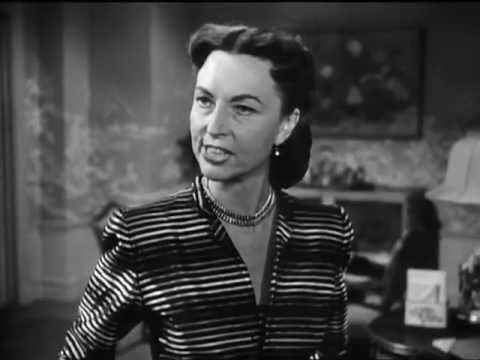
Agnes Moorehead co-starred with Humphrey Bogart when she played Madge Rapf in “Dark Passage” (1947). She earned her noir credentials playing characters such as Ruth Benton in “Caged” (1950), Christine Hill Cosick in “14 Hours” (1951), Juliana Borderau in “The Lost Moment” (1947) and Mrs. Matthews in “Journey into Fear” (1942). Later, she played overbearing witch-mother-in-law Endora in TV sitcom “Bewitched” (1964 – ’72).  

You may know him as the grumpy, bigoted working-class word-mangler Archie Bunker in TV sitcom “All in the Family” (1971 – ’79), but Carroll O’Connor played crime boss Brewster in ‘Point Blank’ (1967) and an uncredited role as a prison guard in “Convicted” (1950).

Donna Reed found herself in dicey company in “Chicago Deadline” (1949), “Scandal Sheet” (1952), “Ransom!” (1956). Later, she became a doctor’s wife Donna Stone and an all-American mom in “The Donna Reed Show” (1958 – ’66). 

Lucille Ball in'The Dark Corner' (1946).
Before she starred in one of the most popular TV sitcoms of all time, “I Love Lucy” (1951 – ’57), and all of the other iterations of the series that followed, Lucille Ball was rubbing shoulders with underworld mugs. She played Kathleen Stewart in "The Dark Corner" (1946), and appeared in “Blood Money” (1933) and “Lured” (1947). 

Herbert Gillis (Frank Faylen) was Dobie’s dad on the TV sitcom “The Many Loves of Dobie Gillis” (1959 – ’63). But before that he was Stan in “99 River St.” (1953), John Payne’s fellow cab driver/dispatcher/boxing trainer. Other noirs he appearing in include “The Lost Weekend” (1945), “They Drive by Night” (1940), “Detective Story” (1951), “The Blue Dahlia” (1946), “Convicted” (1950), “You Can't Get Away with Murder” (1939) and “Riot in Cell Block 11” (1954).

Sitcom “The Patty Duke Show” (1963 – ’66) featured identical twin cousins. Patty Duke played both roles — and you thought “Bewitched” and “I Dream of Genie” were far-fetched? Patty's dad (and Cathy's uncle) Martin Lane (William Schallert), was the gas station attendant who gets bumped off in the beginning of "Down Three Dark Streets” (1954). He also plays the assistant D.A. in “Shield for Murder” (1954). His other work in noirs includes “Cry Terror! (1958), “M” (1951), “The Reckless Moment” (1949), “Riot in Cell Block 11” (1954), “The Tattered Dress” (1957), “The People Against O'Hara” (1951), “Black Tuesday” (1954), “Hoodlum Empire” (1952) and “The Girl in the Kremlin” (1957).

Walter Brennan, left, and John Garfield
in 'Nobody Lives Forever' (1946).

Walter Brennan was Grandpa Amos in “The Real McCoys” (1957 – ’63). He was the lovable but gruff old codger who often gave his family unsolicited advice. Who would suspect that the occasionally ornery Amos led a double life? In “Nobody Lives Forever” (1946) he played penny-ante con man Pop Gruber who teams up with ex-GI Nick Blake (John Garfield) to fleece suckers and make a big score. He was Humphrey Bogart’s sidekick in “To Have and Have Not” (1944) — “Was you ever stung by a dead bee?” He also appeared in “Hangmen Also Die!” (1943), Fritz Lang’s “Fury” (1936), “Nobody Lives Forever” (1946), “The Racket” (1928) and “Grief Street” (1931).

A Final Word …

No doubt about it, mom and pop’s younger selves kept unsavory company and may have even bumped off, robbed or terrorized a few unfortunates. On the plus side, their later TV selves became model citizens. All of which proves that sometimes it’s better to forget the splintery past and focus on the present.